

Menopause in the Workplace:
Understanding the Cognitive and Emotional Impact — and How to Support It
Perimenopause and menopause affect how employees think, respond, and perform. This neuroscience-informed approach helps organisations support their people, retain experience, and maintain performance through this transition.
Menopause is already impacting your workplace — whether it’s visible or not.
For many organisations, the signs are subtle at first:
Experienced employees becoming less confident or more withdrawn
Increased fatigue, reduced focus, or slower decision-making
Higher stress sensitivity or emotional reactivity
Changes in performance that are difficult to attribute
These are often misunderstood as individual issues.
In reality, they reflect well-documented cognitive and emotional changes associated with perimenopause and menopause — particularly in how the brain responds to stress, cognitive load, and hormonal changes.
At the same time, many women in this life stage are:
Often holding senior or specialist roles
Managing complex workloads and leadership responsibilities
Balancing work with caregiving for both children and ageing parents
Without the right understanding, organisations risk losing capability, confidence, and experience — often at the peak of a woman’s career.
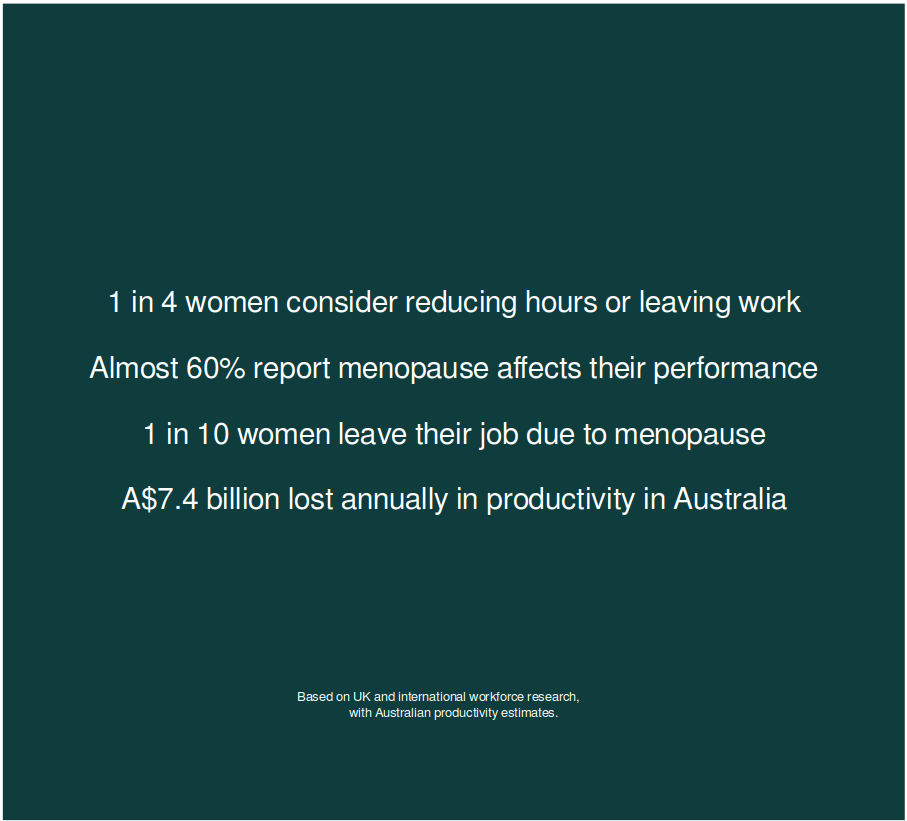
The impact is both human and commercial — and it is measurable.
When menopause is not understood or supported:
Absenteeism and presenteeism increase
Engagement and confidence decline
High-performing employees step back or leave
Managers feel unprepared and avoid conversations
Recruitment and replacement costs rise
This is not a niche issue.
It directly affects:
Retention of experienced talent
Leadership pipelines
Team performance and continuity
When support is in place, the outcome is different.
Employees remain engaged, capable, and confident —
and organisations retain the experience they depend on.
Beyond awareness - applying understanding in practice
Most workplace menopause initiatives focus on building awareness.
This is an important starting point.
However, understanding menopause at a biological level does not automatically translate into knowing how to respond to its impact in a workplace context.
Menopause also affects how the brain functions — particularly in areas responsible for:
Attention and focus
Emotional regulation
Stress response
Cognitive processing and decision-making
Under sustained pressure, these changes can influence how employees perform, respond, and engage.
The difference is not just awareness — it is application.
A neuroscience-informed approach translates this understanding into practical ways of responding:
Supporting focus and cognitive clarity
Reducing unnecessary cognitive strain
Responding more effectively to stress and emotional load
Maintaining performance in a sustainable way
This moves beyond knowing what menopause is —
to understanding how it shows up at work, and what to do about it.
What this enables in practice
This work focuses on helping organisations respond more effectively to the cognitive and emotional impact of menopause — in real working environments.
In practice, this leads to:
Greater clarity around how menopause can affect focus, performance, and behaviour
More confident and consistent responses from managers
Reduced uncertainty and avoidance in conversations
Improved day-to-day performance through better management of cognitive load and stress
More sustainable contribution from experienced employees
How this is delivered
Support is provided through structured, evidence-informed sessions tailored to your organisation.
This may include:
Workshops that build shared understanding of menopause in a workplace context
Training that equips managers to respond with clarity and confidence
Practical strategies that translate understanding into everyday application
A considered, practical approach
The focus is not on adding another initiative.
It is on strengthening how people think, respond, and work — using a clearer understanding of what is happening and how it shows up in practice.
This work is relevant for organisations that:
Employ midlife women across operational, specialist, or leadership roles
Are experiencing unexplained shifts in performance or engagement
Want to retain experienced employees and reduce avoidable attrition
Recognise menopause as both a wellbeing and performance issue
Value evidence-informed, practical approaches over awareness alone
This is not medical advice or clinical treatment.
It is neuroscience-informed, education-based workplace support designed to complement healthcare and existing wellbeing strategies.
Start with a Conversation
Supporting employees through menopause is not just a wellbeing initiative — it is a performance and retention strategy.
or
Download your free guide: “The Menopause Brain”
A neuroscience-informed overview of menopause related brain changes and what can help.